
FORSAKE NOT THE ASSEMBLY
WHY THE EMBODIED GATHERING STILL MATTERS

.
Five weeks into the pandemic, I was struggling. I’d never considered how role the people in the room play in preaching: the way they lean in when the words are landing well; the subtle nods when the Lord is speaking to them; or the simple smiles of encouragement from people I love and who love me in return. All of it makes me better as a preacher.
In the proclamation of God’s word each Lord’s Day, the preacher and the congregation participate together as the Holy Spirit does His work. It’s a beautiful, holy practice. Five weeks in, my sermons were flat because my people were absent. As I’d step to the podium, there’d be a foreboding sense of loneliness.
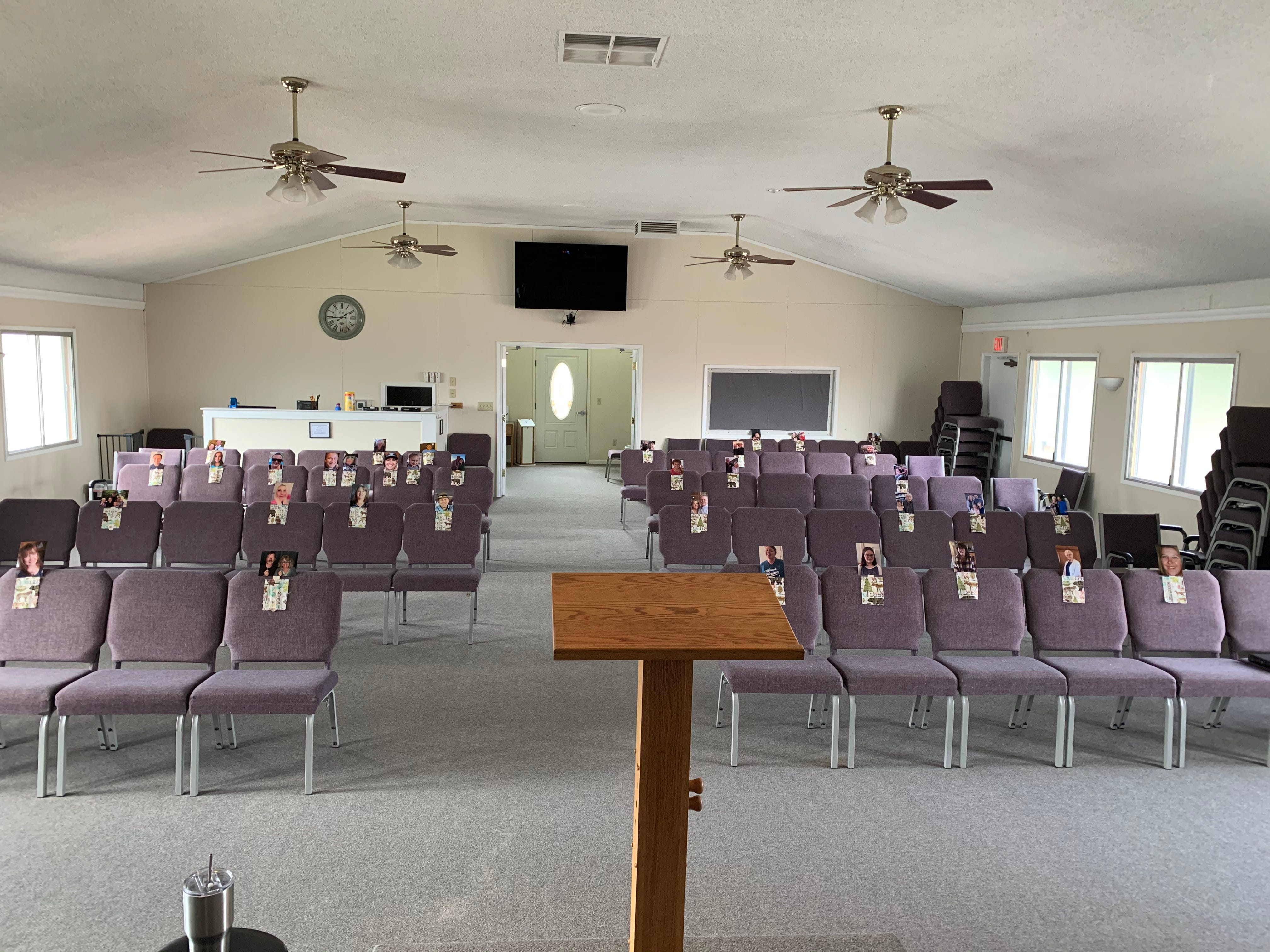
One bright spring morning, I came in and one of my dear friends and congregants, Angela, had taped up the faces of people from our church.(picutred above) She even placed the photos in the seats where they’d typically sit when they were present. When I came into the sanctuary that Sunday, I wept. I wept because I missed my people. I wept at Angela’s thoughtfulness and that she clearly saw me and knew me well. Most of all, I wept in gratitude to God for the privilege of doing life in this place and with these people. I can’t say my sermon was any better that morning, but I can tell you my heart was full.

Six years ago, we all lived through a very strange time. I remember hoping that one of the blessings of that season of our collective experience would be a rekindled appreciation for the richness of embodied life together. It’s been said that “absence makes the heart grow fonder,” and for a season, I think that held true. There was a joy in gathering and an unspoken sense that we’d not all this for granted again.
But as so often happens when events conspire to offer new perspectives, we tend to revert to the mean. With the proliferation of churches streaming their services and the plethora of sermons, songs, and biblical and theological content all available for free, it’s never been more convenient to forego service or “watch it on your own time.” My aim in this essay is to persuade you that regular, consistent, ongoing in-person gathering with your local assembly is vital to your spiritual life.1 The preacher in the book of Hebrews, towards the end of his remarks, says the following:
24 And let us consider how to encourage one another in love and good deeds, 25 not abandoning our own meeting together, as is the habit of some people, but encouraging one another; and all the more as you see the day drawing near.2
This command is given in the context of an extended argument about the all-surpassing sufficiency and superiority of Christ. Jesus is a better high priest, a better sacrifice, a better king, and on and on. And yet here in chapter ten, the preacher puts the lie to the notion that the Christian life can be a “Jesus and me but not thee” kind of endeavor. He commands meeting
with other believers. In these two verses, we can apply three principles that can motivate us to obey this command.
PRINCIPLE 1: WE BECOME THE BEST VERSION OF OURSELVES WHEN WE GATHER.
Verse 24 says that we ought to “consider how to encourage each other to love and good deeds.” This, of course, can and should happen outside the assembly, but its being joined to verse 25—an admonishment to gather—is suggestive that while the preacher may well have more in mind than the gathering, he most certainly does not have less in mind.
I think it’s because as we gather, we hear teaching and exhortation toward holiness, repentance, obedience, love, and humble acts of service. The presence of the saints gathered affirms those exhortations and gives an embodied context to put them into practice. As we call out the good we see in each other, offer loving correction, and call each other to righteous, loving action, we participate in shaping our fellow believers into the people God made them to be.
Again, this can and does happen outside the weekly gathering, but having a regular weekly rhythm where you hear the word and apply it as you fellowship together has a shaping impact. If your interface with church is mediated by a screen while sitting on your couch, you miss out on the shaping effect of ministering to others and receiving the ministry of others; you will become a spiritually impoverished version of who God created you to be.

PRINCIPLE TWO: YOU’RE FORMED BY WHO YOU GATHER WITH.
The first part of verse 25 exhorts us not to abandon our own meeting together but adds “as is the habit of some.” Two different habits are contrasted here. You either form a habit of gathering—participating in body life and the mutual shaping and encouragement in Christlikeness that is sure to follow—or you forsake the assembly and cut yourself off from an important piece of your spiritual formation.
The word “habit” is the Greek word ethos.3 It carries the idea of being customary in an ongoing sense. This isn’t someone who misses a Sunday or two, but someone who, on an ongoing basis, has a regular custom of not gathering together. Habits form character. If you’re spending your Sundays with your water polo team, your golf buddies, or having brunch with your pals from work even if you go back and listen to the sermon later you miss out on the shaping effect of the body gathered and will instead be shaped by whatever community’s customs, values, and “ethos” you form a habit of gathering alongside. Prioritize the gathering of God’s people. Form a long-term “ethos” of honoring the Lord’s Day. Doing so will supercharge your growth in Christ and will increase your impact on others in ways you might not expect. What we repeat, we become.

PRINCIPLE 3: EMBODIED WORSHIP AND FELLOWSHIP ARE OUR FUTURE.
The second half of verse 25 is an exhortation that, as we gather, we encourage each other even more as we see the “day approaching.” The “day” is when Jesus comes back and will
finally and fully free his people and condemn evil. When Jesus comes back, the dead will rise in renewed, glorified bodies. Later in the New Testament, Paul writes:
13 But we do not want you to be uninformed, brothers and sisters, about those who are asleep, so that you will not grieve as indeed the rest of mankind do, who have no hope. 14 For if we believe that Jesus died and rose from the dead, so also God will bring with Him those who have fallen asleep through Jesus. 15 For we say this to you by the word of the Lord, that we who are alive and remain until the coming of the Lord will not precede those who have fallen asleep. 16 For the Lord Himself will descend from heaven with a shout, with the voice of the archangel and with the trumpet of God, and the dead in Christ will rise first. 17 Then we who are alive, who remain, will be caught up together with them in the clouds to meet the Lord in the air, and so we will always be with the Lord. 18 Therefore, comfort one another with these words.4
In both the Thessalonians passage and in our Hebrews text, there’s an admonishment to encourage one another with the hope of resurrection. Eternity will not be an unembodied existence in which we float on clouds. Rather, it’s an embodied existence with an embodied Jesus where we live an embodied life together.
Look, no church is perfect. Leaders fail and sheep sometimes bite. But we gather, in part, to serve as a reminder to each other that this will not always be so. We gather to exhort, encourage, and lift up now as a way of rehearsing for how life will be then.
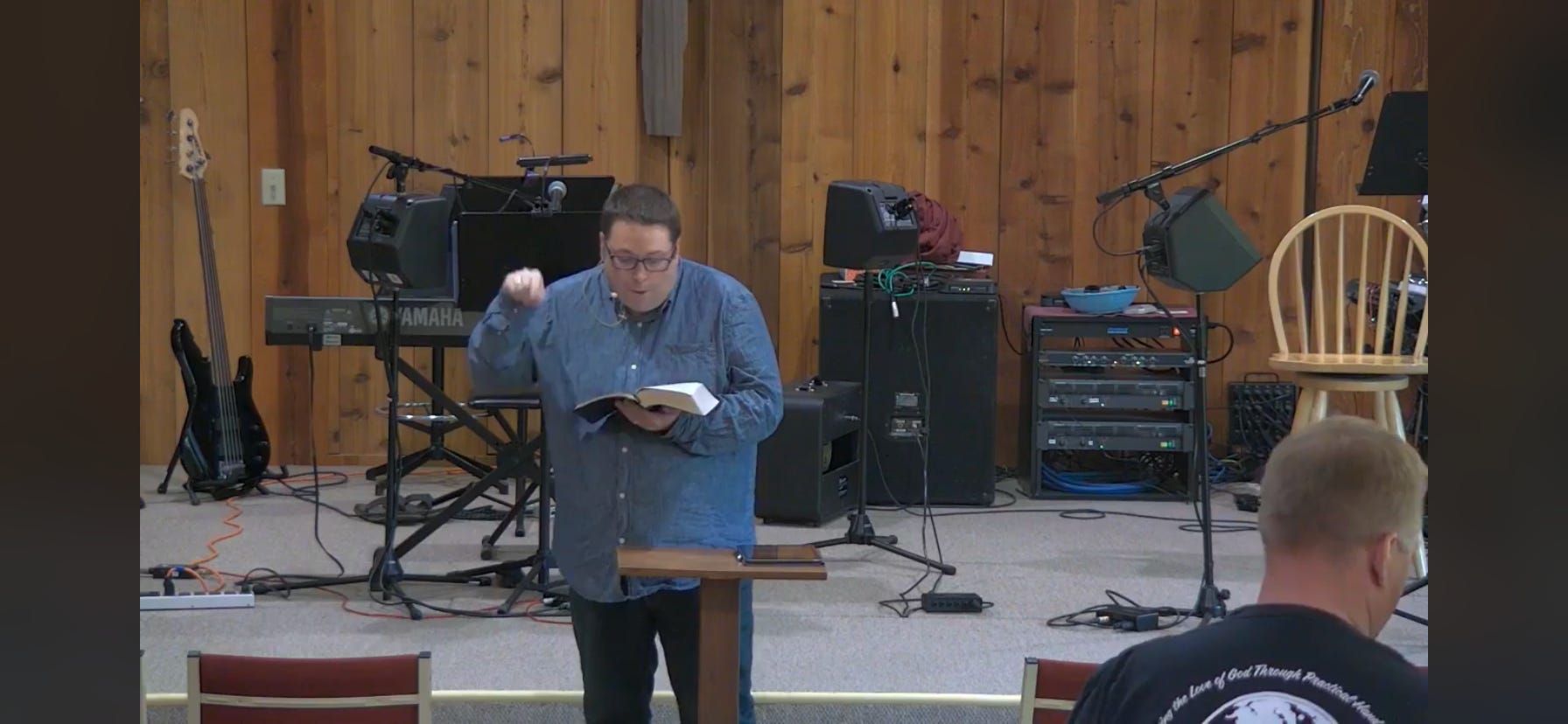
On Sunday, I’ll ascend to the platform before my people and look out at their faces and be a better preacher because they’re there. They’ll be in the process of shaping one another into who God made them to be, and we’ll be awaiting the return of Jesus and developing an ethos for life in the New Earth. All of that and more will be happening at your church too. Go, take part, and be changed.
While certain seasons—such as a long illness, recovery from spiritual abuse, may necessitate an extended absence from the gathering, the ultimate goal should always be a return to the assembly.
Hebrews 10:24-25 (NASB, 2020 Edition).
While I have a background in biblical languages from my time in seminary, I am not a professional Greek or Hebrew scholar.
1 Thessalonians 4:13-18 (NASB, 2020 Edition)
So well said! I agree so deeply with this! The bible says that “iron sharpens iron”. But we can’t be sharpened without rubbing shoulders together, praying together, crying and laughing together, loving Jesus together! This is such an important message for today! I will be sharing this!